
Invited Speakers

Prof. Wei-Chang Yeh
National Tsing Hua University, Taiwan
Prof. Wei-Chang Yeh is a Chair Professor (ASPEED, NTHU, and CYCU) in the Department of Industrial Engineering and Engineering Management at National Tsing Hua University (NTHU), Taiwan. He leads the "Tsing Hua² Intelligent Robot Team," a cross-university research collaboration of approximately 50 members spanning NTHU, NTU, and NCKU, which has received 18 international competition awards in autonomous mobile robot navigation, digital twin simulation, and semiconductor vision inspection. Prof. Yeh has authored almost 400 peer-reviewed SCI papers and holds more than 70 patents. He has been named among the World's Top 2% Scientists by Stanford University and Elsevier for five consecutive years (since 2020). His research spans network reliability theory, metaheuristic optimization (including the Simplified Swarm Optimization and BAT algorithmic frameworks he developed), autonomous mobile robot navigation reliability (δ-corridor, DP-BAT, TM-A*), digital twin simulation with NVIDIA Isaac Sim / Omniverse, and AI-driven semiconductor wafer identification.He serves as Associate Editor of IEEE Transactions on Reliability and has organized multiple special issues on AI, reliability, and robotics. Prof. Yeh is a long-term collaborator under the NVIDIA Academic Grant Program, working with NVIDIA research engineers on autonomous mobile robot reliability, digital twin deployment, and local large-language-model infrastructure for academic workflows. He has delivered plenary and invited lectures at international conferences including ICSRS 2025 (Turin) and GTC 2026 (San Jose), and is scheduled for an extended invited lecture series at Korean universities in June 2026. Beyond publication and pedagogy, Prof. Yeh has led multi-year industry-academia projects with ITRI (Industrial Technology Research Institute, Taiwan) on Real2Sim contact-rich manipulation platforms, hospital logistics robotics, and companion robot ecosystems. His current research focuses on the deployment of closed-loop private AI pipelines on edge GPU infrastructure—specifically NVIDIA DGX Spark—for academic knowledge work, encompassing thesis evaluation, automated assessment generation, student weakness analysis, instructor guidance, and multilingual voice-cloned content delivery.
Title: From Grading to Guidance to
Peer Review: Deploying a Closed-Loop Academic AI Pipeline on
NVIDIA DGX Spark
Abstract: As large language models transform knowledge-intensive
workflows, academic institutions face compounding demands:
sensitive data—student theses, assessment responses, voice
samples, unpublished peer-review manuscripts—require private,
sovereign processing, while shrinking budgets preclude high-end
GPU workstations. This talk presents a local-first, closed-loop
big data pipeline deployed on NVIDIA DGX Spark (128GB unified
memory, Grace-Blackwell architecture), selected over a $10K RTX
Pro 6000 workstation to enable cost-effective replication across
a 50-member research team spanning three universities. The
pipeline integrates five interconnected modules: (1) End-to-End
Assessment Pipeline, covering the full quiz lifecycle—automated
question generation with per-student variants for integrity,
hybrid deterministic/LLM-based scoring, statistical analysis
(item difficulty, discrimination index, Cronbach's α
reliability), and real-time class-level performance dashboards;
(2) Structured Thesis Evaluation, combining deterministic PDF
parsers with LLM-based six-dimension analysis, cross-referenced
against OpenAlex for novelty verification; (3) Weakness Analysis
and Instructional Guidance, in which scored-response patterns
are clustered across cohorts to surface systematic knowledge
gaps and generate targeted remediation strategies alongside
instructor-facing briefings; (4) Peer-Review Triage Assistant,
which processes incoming review-invitation manuscripts to
produce concise preview briefs—covering structural completeness,
novelty cross-referencing, methodological sanity checks, and
reviewer-load recommendations—enabling rapid
accept/decline/redirect decisions; and (5) Bilingual Content
Delivery, generating Traditional Chinese + English slides,
speaker notes, and multilingual narration via zero-shot voice
cloning (Qwen3-TTS) from a 15-second reference sample. We report
empirical results including the evaluation of ~70 theses per
semester, processing of ~500 weekly quiz responses with
automated scoring and psychometric analysis, cohort-level
weakness identification across three courses, preview briefs for
~30 review-invitation manuscripts per month, and 86 slide-level
narrations for a Bayesian Optimization course. We discuss
critical deployment lessons—ARM64 compatibility, unified memory
trade-offs, thermal management, PDF extraction edge cases, and
the ethical considerations of AI-assisted peer review—alongside
benefits of IP preservation, Traditional Chinese localization,
and deployment democratization at one-third the cost of
conventional workstations. The talk concludes with a proposed
"signal triage" architecture where local AI handles 80% of
routine patterns, enabling scholars to focus on the 20% that
demand deep human judgment, offering a reproducible template for
budget-constrained institutions pursuing privacy-preserving
academic AI at lab scale.
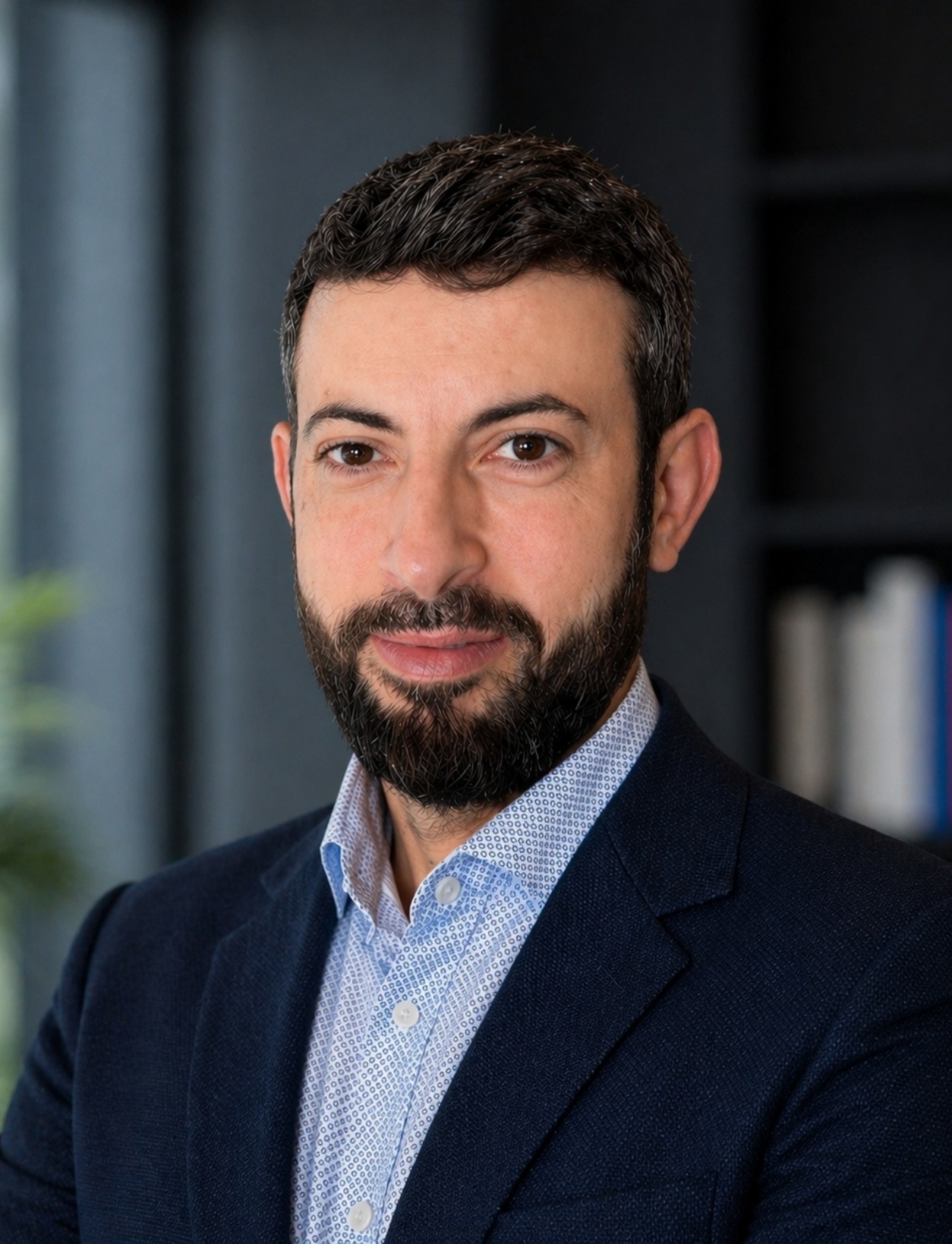
Assoc. Prof. Fabrizio Marozzo
University of Calabria, Italy
Fabrizio Marozzo is an Associate Professor in
Computer Engineering at the DIMES Department, University of Calabria,
Italy, since 2019. He is also co-founder of DtoK Lab S.r.l., an academic
spin-off of the University of Calabria established in 2014.
His current research explores big data analytics, generative artificial
intelligence, large language models, machine learning, and distributed
computing architectures spanning the cloud and edge continuum.
He is an IEEE Senior Member and serves as Associate Editor for several
international journals, including IEEE Access, IEEE Transactions on Big
Data, Journal of Big Data (Springer), SN Computer Science (Springer),
Scalable Computing: Practice and Experience, Big Data and Cognitive
Computing (MDPI), Algorithms (MDPI), and Heliyon (Elsevier). He has also
served on the Program Committees of leading international conferences
such as the IEEE International Conference on Big Data (IEEE BigData),
International Joint Conference on Artificial Intelligence (IJCAI), IEEE
International Conference on Data Mining (ICDM), Pacific-Asia Conference
on Knowledge Discovery and Data Mining (PAKDD), and the European
Conference on Parallel and Distributed Computing (Euro-Par).
He has published about 150 scientific papers, including the books Data
Analysis in the Cloud and Programming Big Data Applications: Scalable
Tools and Frameworks for Your Needs.
Title: When AI Becomes a Bridge Across Expertise: Human-AI Collaboration and the Limits of Agentic AI
Abstract: This talk discusses AI not only as a productivity tool or an
autonomous agent, but as a bridge across expertise. AI can help
non-specialists engage with complex technical domains, connect
knowledge from different experts, and support multi-step problem
solving. At the same time, these capabilities still depend on
human judgment, expert collaboration, and institutional
processes. The talk also highlights some important limits of
current agentic AI systems in real-world environments,
especially in situations that require trust, adaptation, and
coordination. The main argument is that the future of AI lies in
effective and accountable human–AI collaboration rather than in
the replacement of human agency.
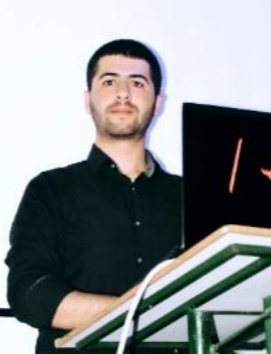
Assoc. Prof. Moncef Garouani
Université Toulouse Capitole, France
Moncef GAROUANI is an Associate Professor at the University Toulouse Capitole and a member of the IRIT lab (SIG team) since 2023. He also serves as the Head of International Relations for the Faculty of Computer Science at University Toulouse Capitole. In 2022, Dr. Garouani successfully completed his doctoral studies, earning a Ph.D. in Computer Science through a collaborative program between Littoral Côte d'Opale University in France and Hassan II University of Casablanca in Morocco. His research interests lie at the intersection of several key areas within AI, including Automated Machine Learning (AutoML), Explainable AI (XAI), and meta-learning. He focuses on developing sophisticated techniques for the automatic selection and optimization of machine learning algorithms, as well as investigating methods to make the decision-making processes of AI models more understandable. Beyond these core areas, Dr. Garouani's research also encompasses Natural Language Processing (NLP) and Computer Vision, exploring how AI can be leveraged to understand and interpret diverse data modalities.
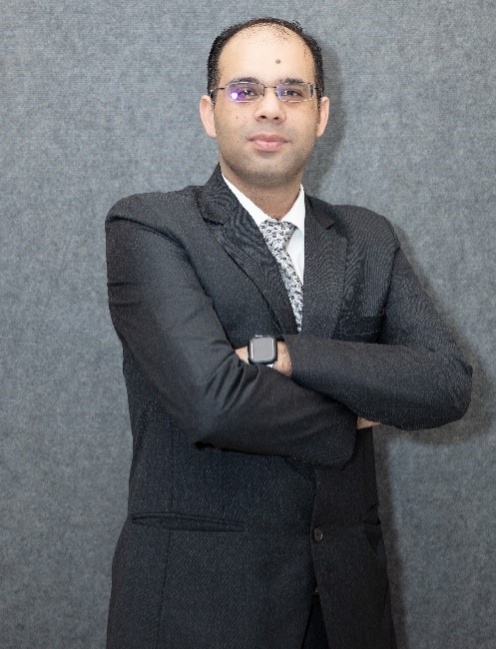
Prof. Anand Nayyar
Duy Tan University, Vietnam
Dr. Anand Nayyar received Ph.D (Computer Science)
from Desh Bhagat University in 2017 in the area of Wireless Sensor
Networks, Swarm Intelligence and Network Simulation. He is currently
working in School of Computer Science and Artificial Intelligence
(SCA)-Duy Tan University, Da Nang, Vietnam as Professor, Scientist,
Vice-Chairman (Research) and Director- IoT and Intelligent Systems Lab.
A Certified Professional with 280+ Professional certifications from
CISCO, Microsoft, CompTIA, Amazon, Alibaba Cloud, Oracle, Google,
Salesforce, Tableau, FinOps, Beingcert, EXIN, GAQM, Cyberoam and many
more. Published more than 300+ Research Papers in various High-Quality
ISI-SCI/SCIE/SSCI Impact Factor- Q1, Q2, Q3, Q4 Journals cum Scopus/ESCI
indexed Journals, 80+ Papers in International Conferences indexed with
Springer, IEEE and ACM Digital Library, 60+ Book Chapters in various
SCOPUS/WEB OF SCIENCE Indexed Books with Springer, CRC Press, Wiley,
IET, Elsevier with Citations: (Google Scholar): 23600+, H-Index: 78 and
I-Index: 322; (Scopus): 13600+; H-index: 61. Member of more than 60+
Associations as Senior and Life Member like: IEEE (Senior Member) and
ACM (Senior Member). He has authored/co-authored cum Edited 70+ Books of
Computer Science. Associated with more than 600+ International
Conferences as Programme Committee/Chair/Advisory Board/Review Board
member. He has completed 1 Grassroot and 1 ASEAN Project. He has 18
Australian Patents, 16 German Patents, 4 Japanese Patents, 44 Indian
Design cum Utility Patents, 13 UK Patents, 1 USA Patent, 3 Indian
Copyrights and 2 Canadian Copyrights to his credit in the area of
Wireless Communications, Artificial Intelligence, Cloud Computing, IoT,
Healthcare, Drones, Robotics and Image Processing. He has guided more
than 200+ Undergraduate Students (B.S. Degree), 30 MCA, 7 M.S. Students
and completed 1 Ph.D Student and currently 3 Ph.D Scholars are working
under him. He has completed 4 Research Grants Projects including 1 ASEAN
and 1 Glocal 30 Project and 1 Grassroot Project in DTU. Awarded 58
Awards for Teaching and Research—Young Scientist, Best Scientist, Best
Senior Scientist, Asia Top 50 Academicians and Researchers, Young
Researcher Award, Outstanding Researcher Award, Excellence in Teaching,
Best Senior Scientist Award, DTU Best Professor and Researcher Award-
2019, 2020-2021, 2022, 2022-2023, 2023-2024, 2024-2025, Distinguished
Scientist Award by National University of Singapore, Obada Prize 2023,
Lifetime Achievement Award 2023, 2024; Asian Admirable Achievers 2024;
Distinguished Academic Leader 2024, Lifetime Achievement Award 2024 and
many more.
He is listed in Top 2% Scientists as per Stanford University (2020,
2021, 2022, 2023, 2024, 2025), Ad Index (Rank No:1 Duy Tan University,
Rank No:2 Computer Science in Viet Nam) and Listed on Research.com (Top
Scientist of Computer Science in Viet Nam- National Ranking: 2; D-Index:
56; World Ranking: 3694).
He is acting as Associate Editor for Computer Communications (Elsevier),
International Journal of Sensor Networks (IJSNET) (Inderscience), Tech
Science Press- IASC, Cogent Engineering, Human Centric Computing and
Information Sciences (HCIS), IEEE Transactions on Artificial
Intelligence (IEEE TAI), Indonesian Journal of Electrical Engineering
and Computer Science, IJFC, IJISP, IJDST, IJCINI, IJGC, IJSIR, IJBDCN,
IJNR, IJSI, IJIES. He is acting as Managing Editor of IGI-Global
Journal, USA titled “International Journal of Knowledge and Systems
Science (IJKSS)”. He has reviewed more than 5700+ Articles for diverse
Web of Science and Scopus Indexed Journals. He is currently researching
in the area of Wireless Sensor Networks, Internet of Things, Swarm
Intelligence, Cloud Computing, Artificial Intelligence, Drones,
Blockchain, Cyber Security, Healthcare Informatics, Big Data and
Wireless Communications.
Title: From Pipeline to Impact: DataOps Best Practices and 9 Steps to
Transform Data Science Delivery
Abstract: Modern data teams are under pressure to do two things
at once: build reliable, automated data pipelines and turn data
science work into measurable business impact. This keynote
brings those two priorities together through a practical DataOps
lens. Drawing on the themes of “Best Practices in DataOps: How
to Create Agile, Automated Data Pipelines” and “DataOps: 9 Steps
to Transform Your Data Science Impact,” the session explores how
organizations can move beyond isolated analytics efforts toward
a scalable, collaborative, and outcome-driven operating model.
The keynote will show how DataOps helps bridge the long-standing
gaps between data engineering, analytics, and data science by
applying agile principles, automation, testing, monitoring, and
continuous improvement to the full data lifecycle. It will
examine the foundations of modern pipeline design, including
reproducibility, observability, data quality controls,
orchestration, versioning, and rapid iteration. At the same
time, it will highlight the organizational shifts required to
ensure that technical excellence actually translates into
business value. A central focus of the session is the
transformation of data science from a project-based function
into a production-ready capability. Through a clear nine-step
perspective, attendees will learn how to reduce friction between
experimentation and deployment, improve cross-functional trust,
accelerate feedback loops, and deliver insights that are timely,
dependable, and actionable. Rather than treating DataOps as just
another framework, this keynote presents it as a disciplined yet
human-centered approach to working with data at scale. It is
designed for leaders, engineers, analysts, and data scientists
who want to create agile teams, automate with purpose, and build
data products that are both technically robust and strategically
meaningful. The result is a roadmap for turning better pipelines
into better decisions—and better decisions into lasting impact.
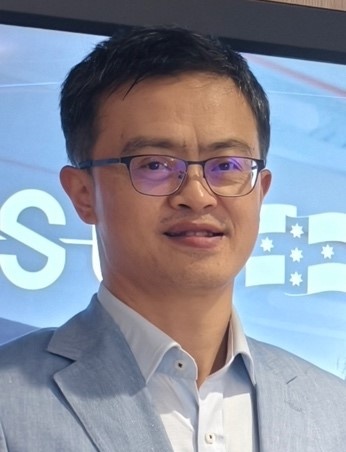
Assoc. Prof. Paul S. Pang
Federation University, Australia
Dr. Pang is an Associate Professor of cyber
security and he leads the Internet Commerce Security Lab (ICSL) at the
Institute of Innovation, Science and Sustainability, Federation
University Australia. Before joining Federation University, he was a
Professor of Data Analytics and Director of Centre Computational
Intelligence for Cybersecurity at the Unitec Institute of Technology,
New Zealand. His research specializes in AI for cybersecurity, applied
blockchain, and digital agricultural traceability. Dr. Pang is a Senior
Member of IEEE, the Event Editor of Neural Network Journal Elsevier,
Associate Editor for Springer's Pattern Analysis & Applications, and
Advisory Board Member for the Journal of Cybersecurity Technology
(Taylor & Francis).
Title: Structured Knowledge as the Backbone of Domain-Specific LLM
Agents: A Harness Engineering Perspective
Abstract: Deploying large language models (LLMs) for real-world domain
tasks requires more than capable models and well-crafted prompts. This
talk introduces LLM harness engineering, a five-dimension framework that
systematically governs how agents are built: context engineering, prompt
engineering, knowledge base (KB) design, task decomposition, and task
ordering. We argue that the knowledge base is the pivotal dimension,
acting as the structured substrate from which reliable, grounded, and
auditable agent behaviour emerges. We present two production-oriented
case studies from the Australian agricultural sector. The first is an
Apple Traceability Agent that queries a lifecycle knowledge base
structured around a four-dimensional schema (Timing, Observation, Key
Measurement, Management) with BBCH phenological codes as a cross-variety
alignment mechanism. The second is an Agricultural Compliance Audit
(ACA) Agent deployed on the GrainSupp blockchain platform, which
decomposes the Australian Export Control (Plants and Plant Products)
Rules 2021 into hierarchical audit checkpoints and applies
section-specific tuned prompts against farm evidence. Evaluated across
four LLMs, prompt-tuned agents achieve up to 99.1% compliance decision
accuracy, a 12.8 percentage point improvement over untuned baselines at
a cost of $0.031 per audit.
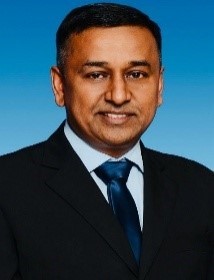
Assoc. Prof. Ramesh Kumar Ayyasamy
Universiti Tunku Abdul Rahman, Malaysia
Ramesh Kumar Ayyasamy (Senior Member, IEEE) is an
Associate Professor in the Faculty of Information and Communication
Technology at Universiti Tunku Abdul Rahman (UTAR), Malaysia. Dr Ramesh
holds a Ph.D. in Information Technology from Monash University,
Australia, which he completed in 2013. He has over 23 years of teaching
and research experience in Computer Science and Information Systems. He
has held various academic and research roles at multiple institutions
throughout his career. Dr. Ramesh's research expertise lies in AI-driven
text analytics, focusing on sentiment analysis, deep learning for
healthcare imaging, and semantic image segmentation. His work bridges
theoretical foundations and practical applications, contributing to
natural language processing, computer vision, smart city development,
and health informatics. In addition to his research activities, he plays
an active role in the academic community as a reviewer for leading
WoS/Scopus ranked international journals and IEEE indexed conferences.
He serves on the editorial boards of several scholarly journals,
including Discover Artificial Intelligence, Journal of Engineering and
Applied Science, International Journal of Innovative Engineering,
Science and Technology and Iris Online Journal of Cyber security &
Computing technology.
Title: Architecting the Intelligent Future: Data, Computing, and
Society
Abstract: The rapid growth of big data and advanced computing
technologies is reshaping the foundations of modern society. From
healthcare and finance to education, manufacturing, and smart cities,
intelligent data-driven systems now influence how organizations operate,
make decisions, and create value. This keynote explores the evolving
relationship between big data, artificial intelligence, cloud computing,
and high-performance computing in building the next generation of
digital ecosystems. Beyond technological advancement, the keynote
addresses critical challenges in data governance, cybersecurity,
privacy, ethics, and sustainability. As intelligent systems become
deeply integrated into everyday life, responsible innovation and
human-centered computing must remain central priorities. By connecting
technological progress with societal impact, this keynote provides a
forward-looking perspective on how researchers, industry leaders, and
policymakers can collaboratively architect an intelligent, secure, and
inclusive digital future driven by big data and advanced computing.
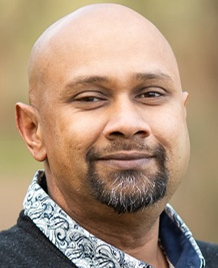
Assoc. Prof. Quazi Mamun
Charles Sturt University, Australia
Dr Quazi Mamun is an
Associate Professor in Computing and the Higher Degree by Research (HDR)
Coordinator at Charles Sturt University, possessing over 25 years of
experience in teaching, research, and academic leadership. His research
expertise focuses on artificial intelligence, cybersecurity, and the
Internet of Things, with an emphasis on creating trustworthy digital
systems through international collaboration. A Senior Member of the
IEEE, Dr Mamun has published more than 90 research papers in top-tier
international journals and conferences and is recognised among the top
1% of European Alliance for Innovation (EAI) members for his significant
contributions to the global research community. He has successfully led
numerous interdisciplinary projects, including a prestigious $5,000,000
ASPIRE grant from the Japan Science and Technology Agency to investigate
infrastructure for ambient intelligence. Dr Mamun earned his PhD from
Monash University, following a Master of Science from Waseda University
in Japan and a Bachelor of Science from the Bangladesh University of
Engineering and Technology. His academic influence extends globally
through visiting professorships in India and collaborative initiatives
across Asia, Europe, and North America. In addition to his research
impact, he is an expert in curriculum renewal and has supervised 10 HDR
students, demonstrating a long-standing commitment to high-quality
postgraduate research training and the mentorship of early-career
researchers.
Title: Towards Trustworthy Intelligent Systems: A Research Journey Across Big Data, AI, Cybersecurity and IoT
Abstract: The rapid growth of big data, artificial intelligence,
cybersecurity technologies and the Internet of Things is reshaping how
intelligent systems are designed, deployed and governed. While these
technologies offer significant opportunities for automation, prediction,
optimisation and decision support, they also introduce new challenges
related to trust, security, privacy, transparency, resilience and
responsible use. This invited talk presents a research journey across
several interconnected areas of computing, including big data analytics,
AI-enabled cybersecurity, secure IoT systems, blockchain-assisted trust
management, cloud-native compliance automation and intelligent
cyber-physical systems.
Rather than focusing on a single project, the presentation reflects on a
broader research programme aimed at developing trustworthy intelligent
systems for real-world digital environments. It discusses how
data-driven techniques can be used to detect threats, support secure
decision-making, improve system resilience and enable scalable
intelligence across distributed infrastructures. The talk also
highlights the role of emerging approaches such as federated learning,
edge intelligence, zero-trust architectures, blockchain-enabled
verification and agentic AI in addressing contemporary challenges in
connected and autonomous environments.
Drawing on research experiences across IoT security, communication
networks, autonomous systems, smart infrastructure, healthcare data
management, cloud compliance and cybersecurity awareness, the
presentation identifies key lessons for designing intelligent systems
that are not only accurate and efficient but also secure, explainable,
accountable and socially responsible. The talk concludes by outlining
future research directions for trustworthy intelligent computing, with
emphasis on interdisciplinary collaboration, human-centred design,
responsible AI governance and the translation of research outcomes into
practical impact.
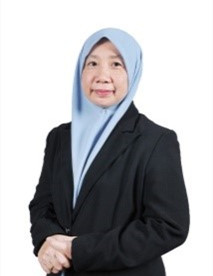
Assoc. Prof. Marshima Mohd Rosli
Universiti Teknologi MARA, Malaysia
Marshima Mohd Rosli is an Associate Professor in
the Department of Computing Sciences at the Faculty of Computer and
Mathematical Sciences, Universiti Teknologi MARA, Malaysia. She holds a
PhD in Computer Science from the University of Auckland, New Zealand.
Her research primarily focuses on software engineering, system
development, artificial intelligence, and data analytics. Her research
primarily focuses on improving software and data quality through machine
learning, empirical evaluation, and intelligent systems. A passionate
advocate for multidisciplinary innovation, she serves as a researcher at
the Cardiovascular Advancement and Research Excellence (CARE) Institute,
Universiti Teknologi MARA, where she collaborates with clinical experts
to develop AI-driven healthcare solutions. She has contributed numerous
publications to renowned conferences and journals such as IEEE and ACM.
Title: Beyond the Black Box: A Data-Driven Approach to Optimizing
Active Learning Strategies in Healthcare
Abstract: Data-driven models are heavily utilized in domains like
healthcare for precise predictions, but they require massive volumes of
high-quality labeled data. Because acquiring labeled medical data is
notoriously expensive and constrained by privacy issues, Active Learning
(AL) has emerged as a crucial methodology to minimize labeling costs by
selectively querying only the most informative samples. However, the
efficacy of AL is highly vulnerable to data quality issues, such as
missing values, class imbalance, high dimensionality, outliers, and data
redundancy. Currently, many researchers treat AL strategies as a black
box, applying them without systematically analyzing the underlying
dataset characteristics, which often results in unpredictable or
suboptimal predictive performance.This presentation introduces a novel
data-driven selection model designed to solve the no free lunch problem
in active learning. By conducting extensive experimental evaluations
across various medical datasets, this study systematically mapped the
relationships between specific data quality challenges and the
performance of baseline AL strategies, including Uncertainty Sampling,
Query-by-Committee (QBC), and Diversity Sampling.